
Shoson Thatawakorn | Ausara
The Ausara co-founder on the many benefits of playing with fire (and a whole lot more).
The first time Shoson Thatawakorn almost burned down the house, he was playing under his grandfather's mahogany desk, aged six or seven. It was dark and he didn't have a light, but he did have candles, paper, and a fan. If he blew the flame hard enough, he reasoned, it would extend and he would be able to see everything. The study was filled with ancient books, including the first ever book written about law, signed by the then King of Thailand.
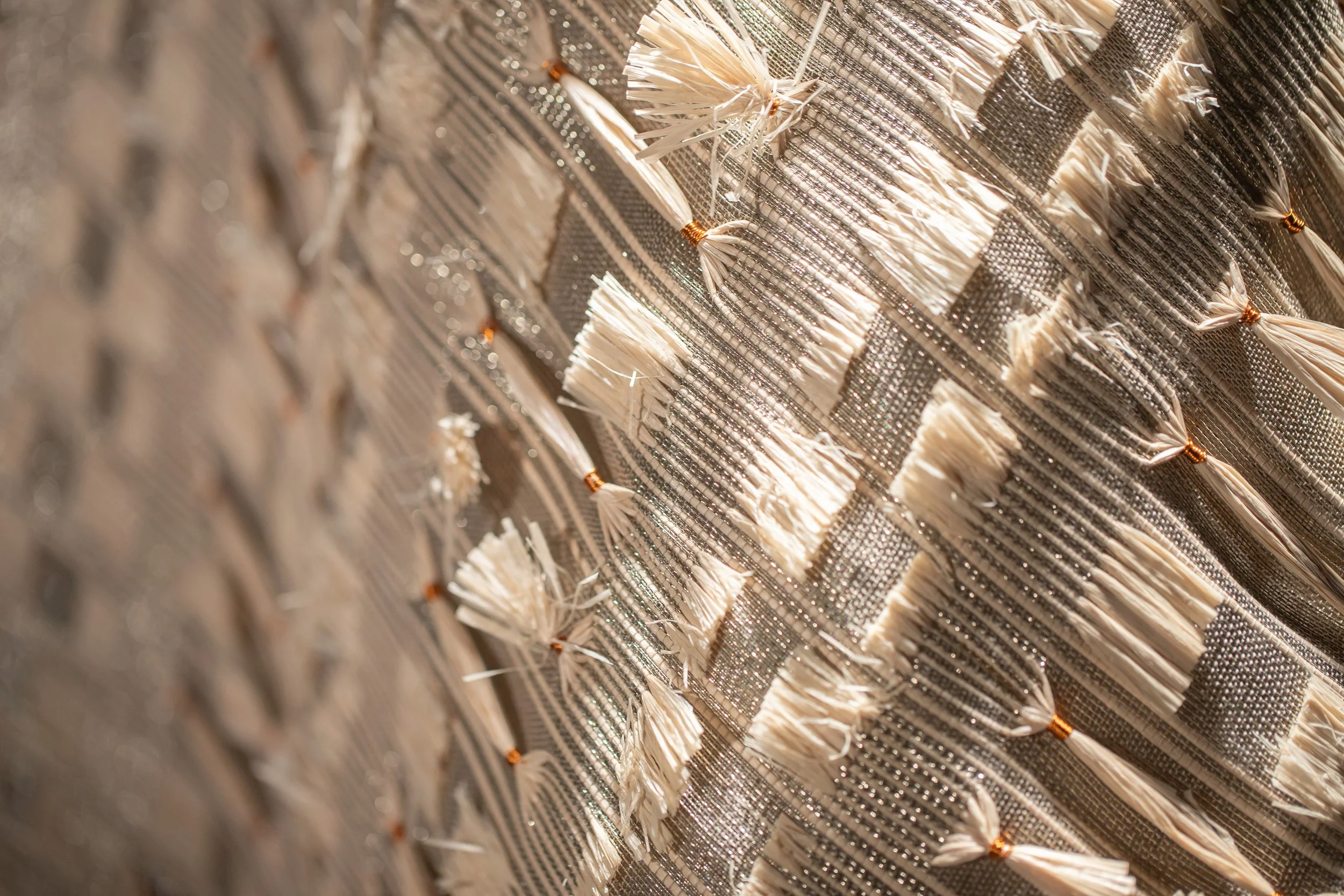
“I learned a lot in childhood about how to play, and that still really affects my professional life,” he reflects. It's the day after opening night of Hanaburi (en: Fallen Flowers), a temporary installation held at Angela Brown Ltd in the first week of May, 2026. Inspired by our Flower District location, Shoson and his team spent three days creating a world of metal fabric, eucalyptus, asparagus fern and sweet pea in our space.
As we take in the aromas and study the passing sun on glistening fabric, we dive deep into his thought process, relationship to risk, and unique perspective on freedom. And if there’s one thing the visionary designer wants you to know, it’s this:
“You might find that, in the end, I’m just a boy. Nothing more.”
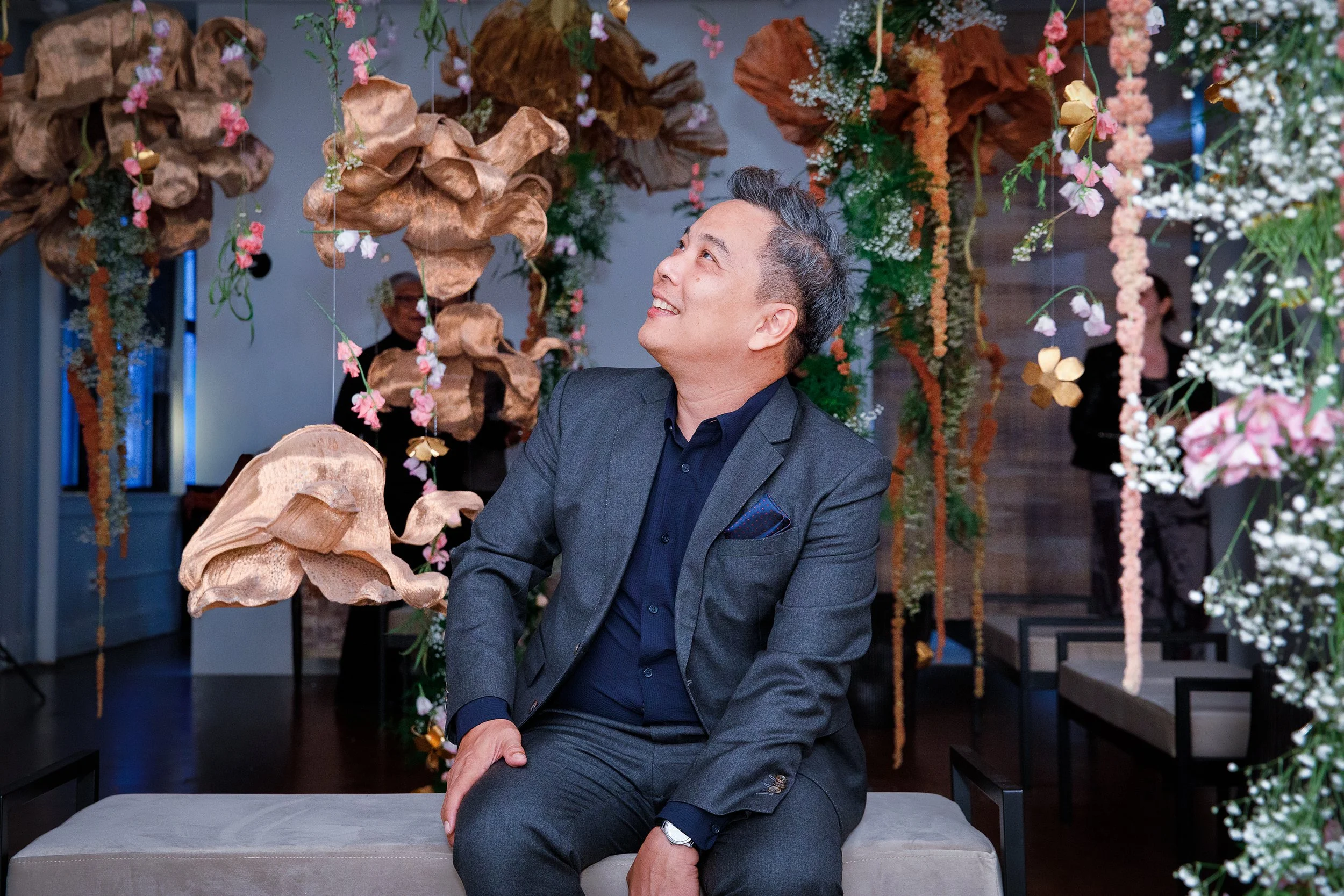
Photo: Marc DeGeorge / MuseMarc Studio
How do you feel seeing your installation 24 hours after you installed it? Do you see it differently today?
Definitely. It's got an edge today, and is somehow friendlier. The first day it was a stranger to me; the flowers were all quiet. Today I know every angle of it, and it speaks louder every time I see it.
What is it saying to you now?
“Watch me, and forget me quick.” Because appreciation takes time. It’s better to forget the first time so that you can come back and experience it all over again. That way, you don’t label it or judge it. All that does is hold you back.
Where does your instinct for pushing boundaries come from?
I don't see boundaries anywhere, actually. I’m still just a boy. One of my best qualities is that I have no fear. Sure, fanning a lit candle could burn down the house. It’s possible. But you know what? You never know!
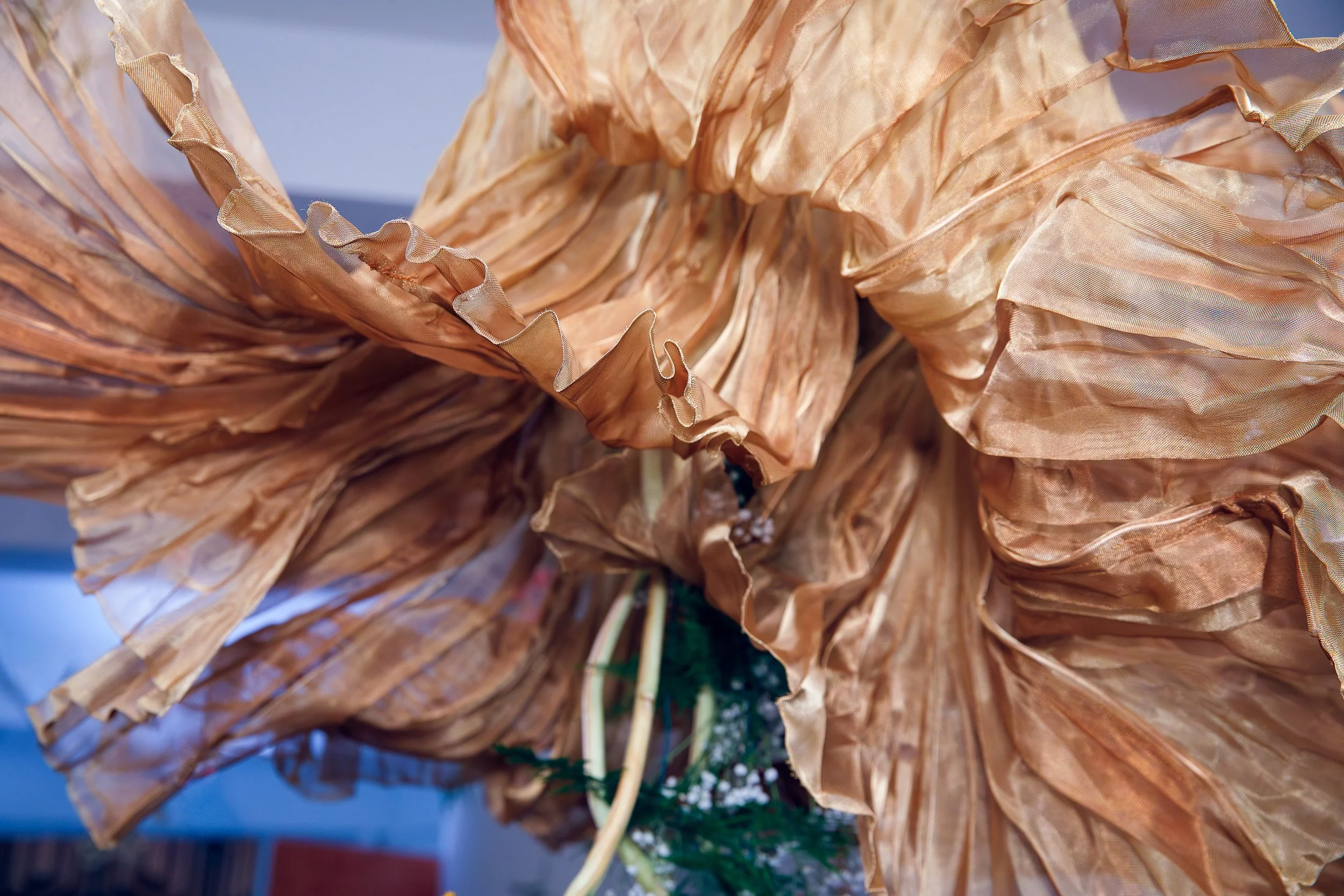
Photo: Marc DeGeorge / MuseMarc Studio
“Most of the time, errors give you better answers than what you planned.”
It’s a fine line between destruction and creation.
They’re one and the same thing. You need to know how to break it in order to reverse it. And also, it’s just fun! But then there is the other part of me which takes over at that point and says, “This is quite good, we can do something with that.” I tend to take turns using my left brain and right brain, otherwise there’s going to be trouble.
You love to take risks.
Exactly. My approach is not linear at all. It’s just a bunch of experiments and trial and error. I play a lot in the sandbox. I don’t have any design books in the office, I don’t go to design fairs. I’m more interested in other things, like culture, sports, agriculture…
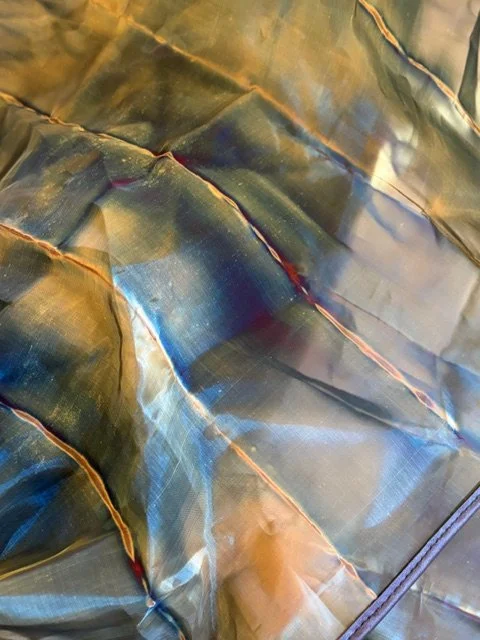
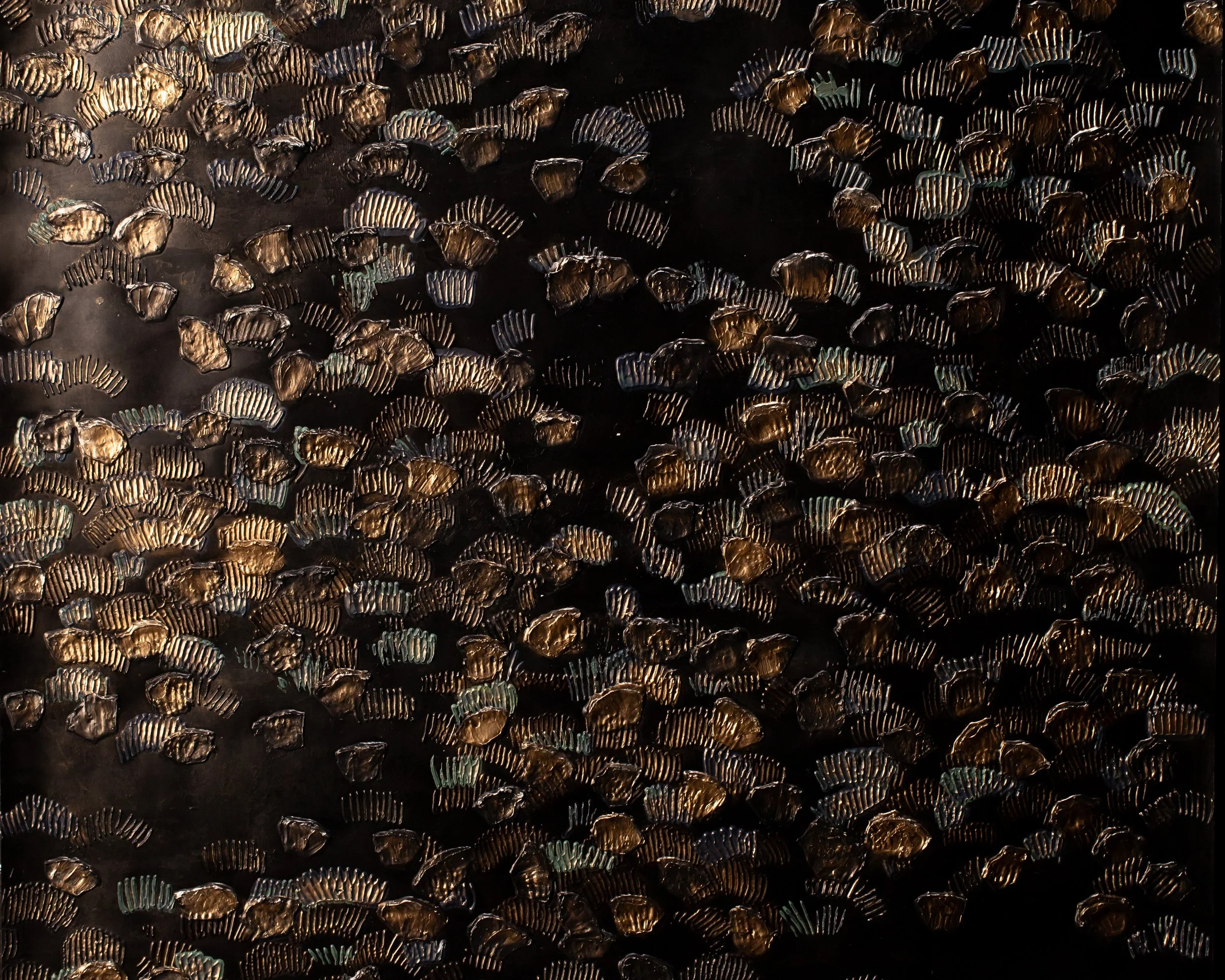
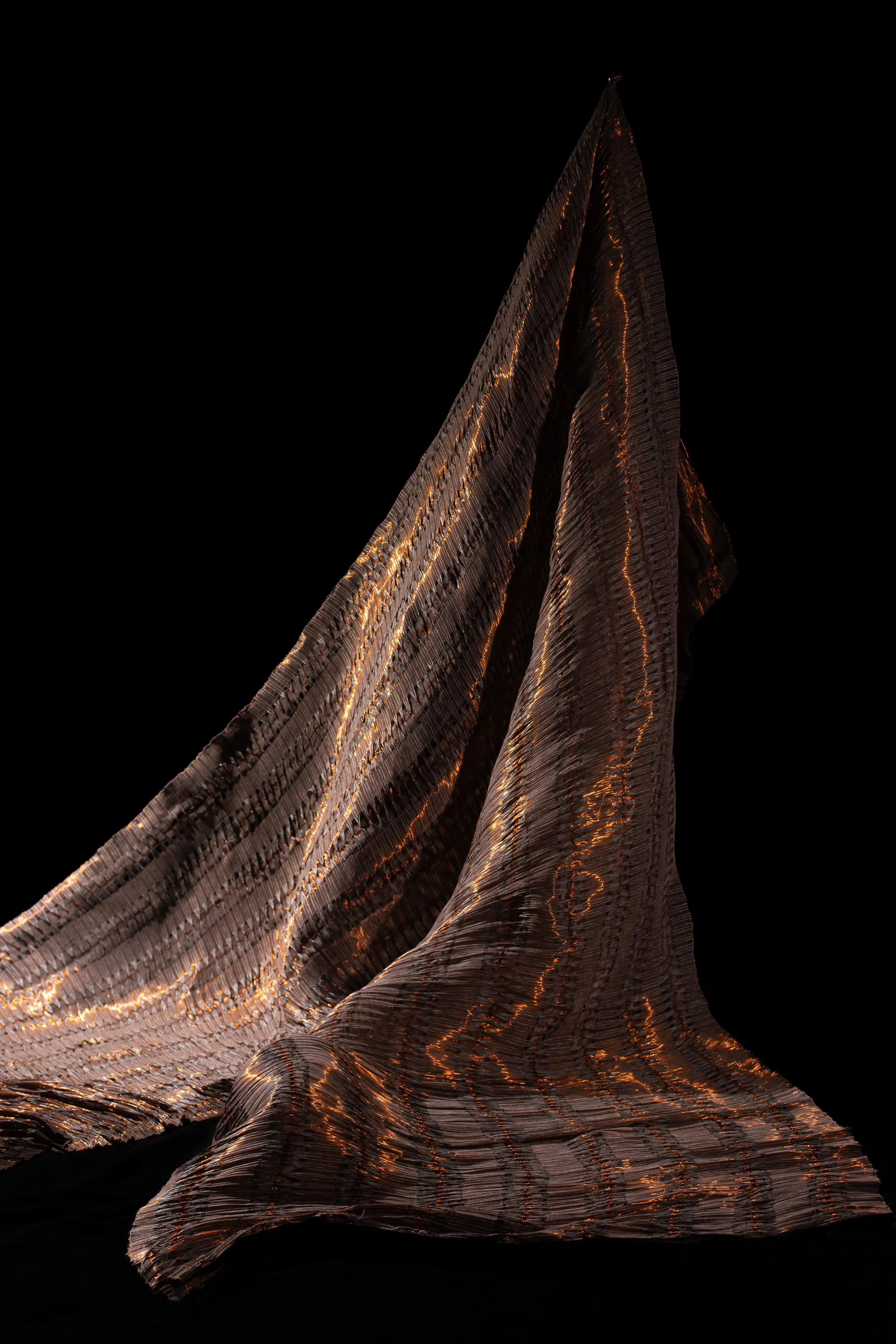
Take the big blue fabric, Aurora. I found it in the fishing industry. It’s made of stainless steel, and it’s used to filter water. Now, my major at university was in ceramics and textiles. I discovered that the fabric can withstand temperatures of up to 2,190 °F, but I didn’t have a kiln in my office so I said, let’s use a blow torch. And with a bit of trial and error, the fabric changed color. I think most of the time, errors give you better answers than what you planned.
Has that approach ever backfired?
It's always controllable, because smart me will say, I'm not against you, but here’s plan B and plan C. We work quite well together. We never fight.
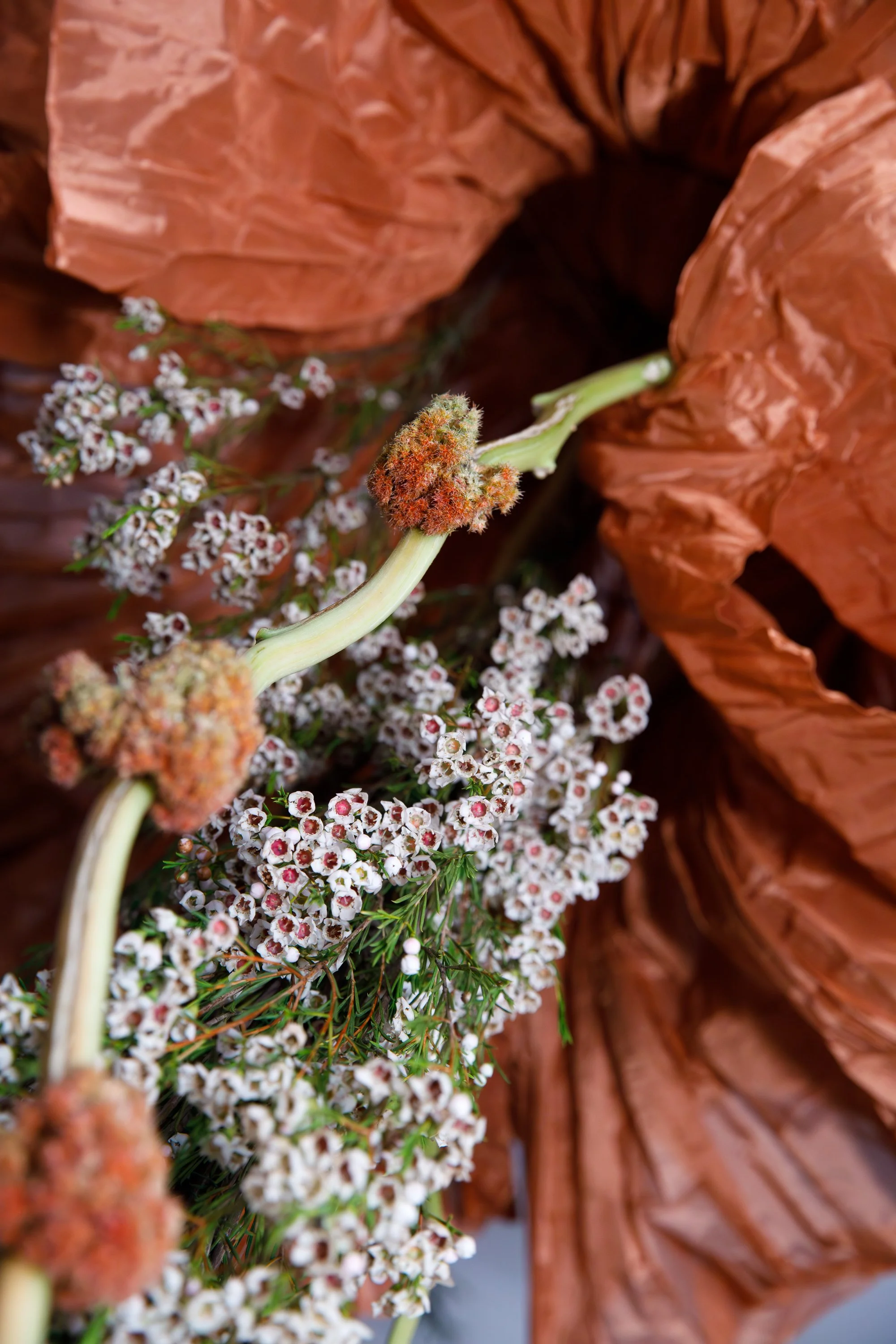
Photo: Marc DeGeorge / MuseMarc Studio
“When a textile starts with a story, it opens it up to any possibility.”
You work with so many different materials, from nylon safety belts and twigs to metal fabric. What do you look for in a material, is there a common thread between them all?
It’s how it reacts to light, and how it ages with time. For instance, with Aurora, we burn it. So then it becomes about temperature, nozzle size, the distance between the burning and the substrate, which we assess by ear. It should sound like ‘chrrrr’. If it’s more of a ‘tssss’ then you need to open up the nozzle more.
What does fire spark within you?
I love the split second moment when I finally find the answer for standardizing the production process for a new product, and turning chaos into order. It’s like taming the monster. That’s the feeling.
How consciously do you try to engineer certain outcomes?
It’s all subconscious. I don't have a desk in my office. I’m not really religious, but I do have a very scientific Buddhist practice. Walking meditation is very important to me. The idea is for your brain to go into autopilot so it’s not actively thinking about moving your body. That’s when it starts to develop ideas all on its own.
“We study how time and light react to things. Only then do we move into design.”
How does an idea take shape?
I don't usually sketch, but once I have the idea, I visualize the mass that I have in my mind with clay or paper. Then we start brainstorming. It's not always my idea, but I have a feel for the form. Everyone brings their product development to the table. We let them sit for a day, a week. We study how time and light react to these things. Only then do we move into design, but it’s a very primitive way of designing. We don’t have AutoCAD. We have a lot of paper, carving tools, and that’s it.
How do you feel when a material is no longer yours?
I love it. I bring the fire and let it develop under my control, but it's not for me to hoard it. I love to share, and I just want to see it naturally grow into something that is entirely beyond my imagination as well.
What’s your relationship with the passing of time?
It's beautiful, inevitable. Growing up Buddhist, I know there’s nothing we can control (even if nature allows you to think that you can tame it a bit). A fabric will change between today and tomorrow, you just don’t notice it. That’s why I never pick just one color, but a range. We present at least three swatch colors for approval, because it’ll never be one exact color all the time. It’s in the material’s nature to keep changing.
“My aim is always moving, but it's always about taming the flame. ”
What are you reaching toward?
I’m a Gemini, so I think I have multiple personalities. Each of them has maxed out the flame at some point, but I’ve got more than one flame. I do it all at 100%. My aim is always moving, but it's always about taming the flame. Trying to do something different. And that will never stop. I need that chemical reaction in my brain.
What are you portraying?
I think I’m selfish, I just care about my chemistry. I'm not portraying anything. I think I’ve moved past all those expectations and I don't care about external feedback anymore.
What are you concealing?
I try to hold back a bit of my flame sometimes, it’s true. Otherwise my team would be on the floor, it would be too much for everyone. So then I try to get as close to my expectations as possible.
“You can’t have ‘half-beauty’ when pure beauty is what you’re after. ”
What does it take to be free?
I'm always free. My name means freedom. ‘Person with free will’. I do what I want, that’s my primary function. Come to think of it, I think that’s the only quality that I have: the ability to be free, to detach myself from Earth’s orbit. That’s all I’m looking for.
What is the dialogue that you have most often with yourself?
I realize that being free might come at a cost, so I’m always talking to my other me’s. The smart one and the risky one are always in dialogue. Ultimately, you have to pick a side because you can’t have ‘half-beauty’ when pure beauty is what you’re after. It’s not going to work.
How do you know when a piece is done?
I heard this from somebody a long time ago, and more and more it’s become my way of working: perfection is a state you reach when you can't put any more in and you can't take any more out. It’s very subtle. To me, that's everything.
See more from Ausara.