
Alexander Lamont
The namesake designer and self-described ‘treasure hunter’ on childhood play and the transcendent power of materials.
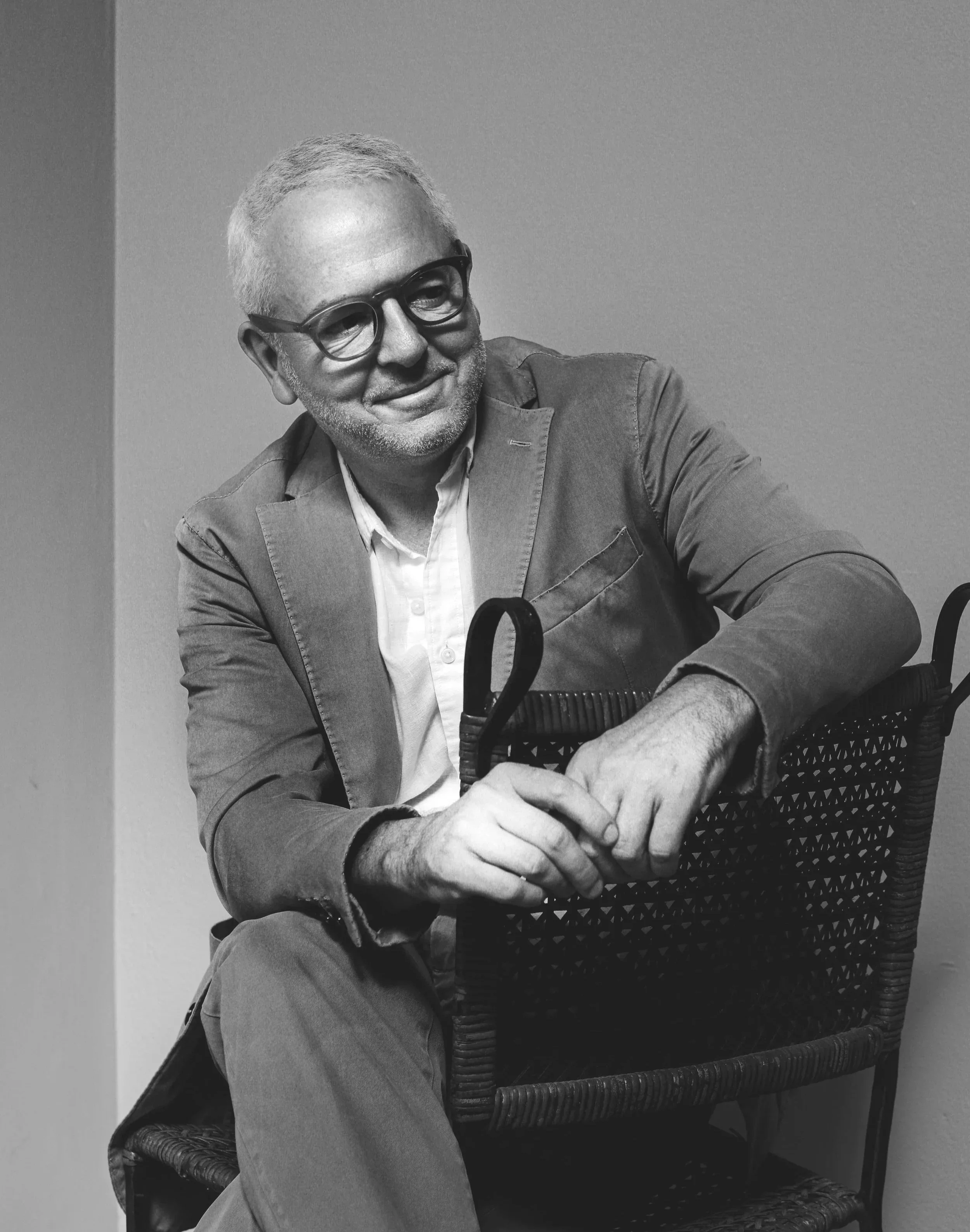
Alexander Lamont dials in from his study in Bangkok, where huge tomes protrude from behind him and objects in bronze, straw and lacquer jostle for space. They are products of a curiosity sparked by the intensity of growing up between Kenya, India and England, then deepened over decades spent building a business in Asia.
An Englishman in Thailand, Alex leads a workshop of craftspeople who have spent lifetimes mastering ancient techniques and developing new ones. With a cup of Yorkshire tea by his side, he takes us on a journey through a life lived among the world’s most extraordinary materials.
“If your imagination has to make its own entertainment, then it will.”
What’s your earliest memory?
A garden. Very simple, just grass, a fence, and a pond with 24 white ducks. This is about 30 miles up the hill toward the Rift Valley from Nairobi in Kenya. I moved there with my mum in January 1969. She was 24, I was six weeks old. My dad was off gallivanting around Somalia and Ethiopia on church-funded projects. He was the greatest dad and I loved him, but some of the irresponsible things he did as a father, I almost can’t believe. The stresses it put my mum under, as a young mother, I don’t believe anybody would stand for today. While the two of us were totally isolated in this village home with little to do, the garden, with the water and the mud and the ducks, became the perfect playground.
You once said you are looking for a “transcendent skin” in everything you make. What are you transcending?
I grew up in this family company, which my dad started after we moved back to England, selling folk art, antiques and crafts from around the world. He was unbelievably enthusiastic about his work. Growing up working class in Liverpool, he thought he’d won the lottery, having this beautiful business with the opportunity to travel. He’d often take me along to this big cold warehouse in Somerset, England, where wooden crates would arrive from around the world every day. You’d open one to find all these things wrapped in, say, Mexican newspaper, and from out of it came these papier-mâché objects in the most beautiful, bright colors. You’d feel a strong sense of Mexico; a ray of sunshine in cold, gray, wet Somerset.
Working with my dad wasn’t always easy, but it was very hands-on. Doing a stock take of items from something like 55 countries was a difficult but sensual experience. Everything had its own character, and by touching it, you became aware of its weight and its skin. It was my design education.
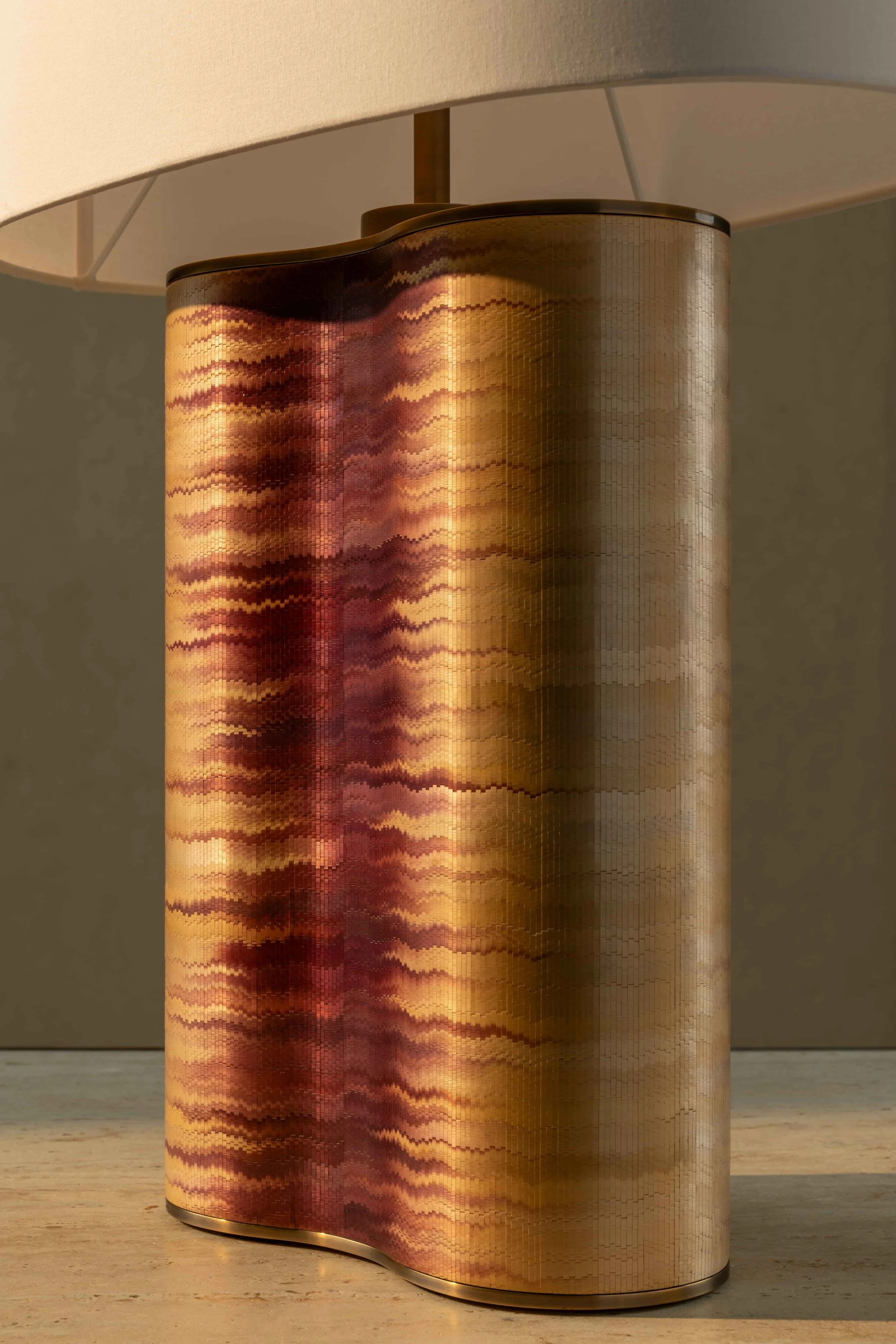
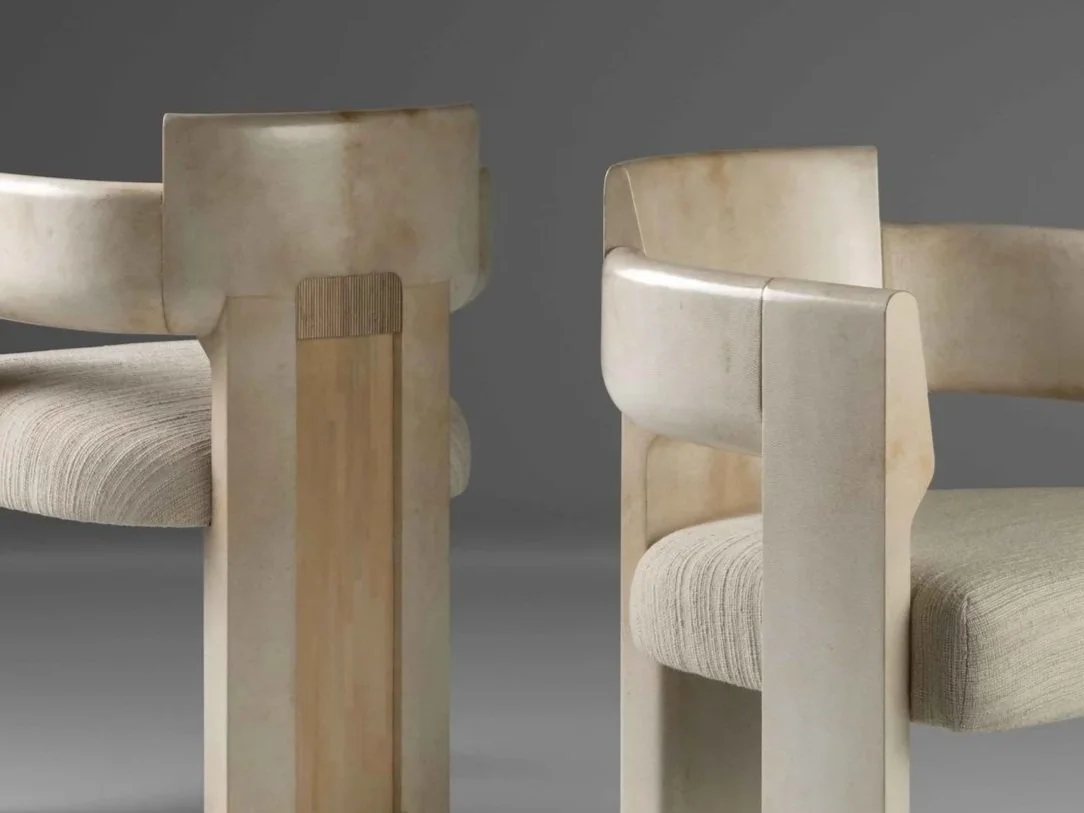
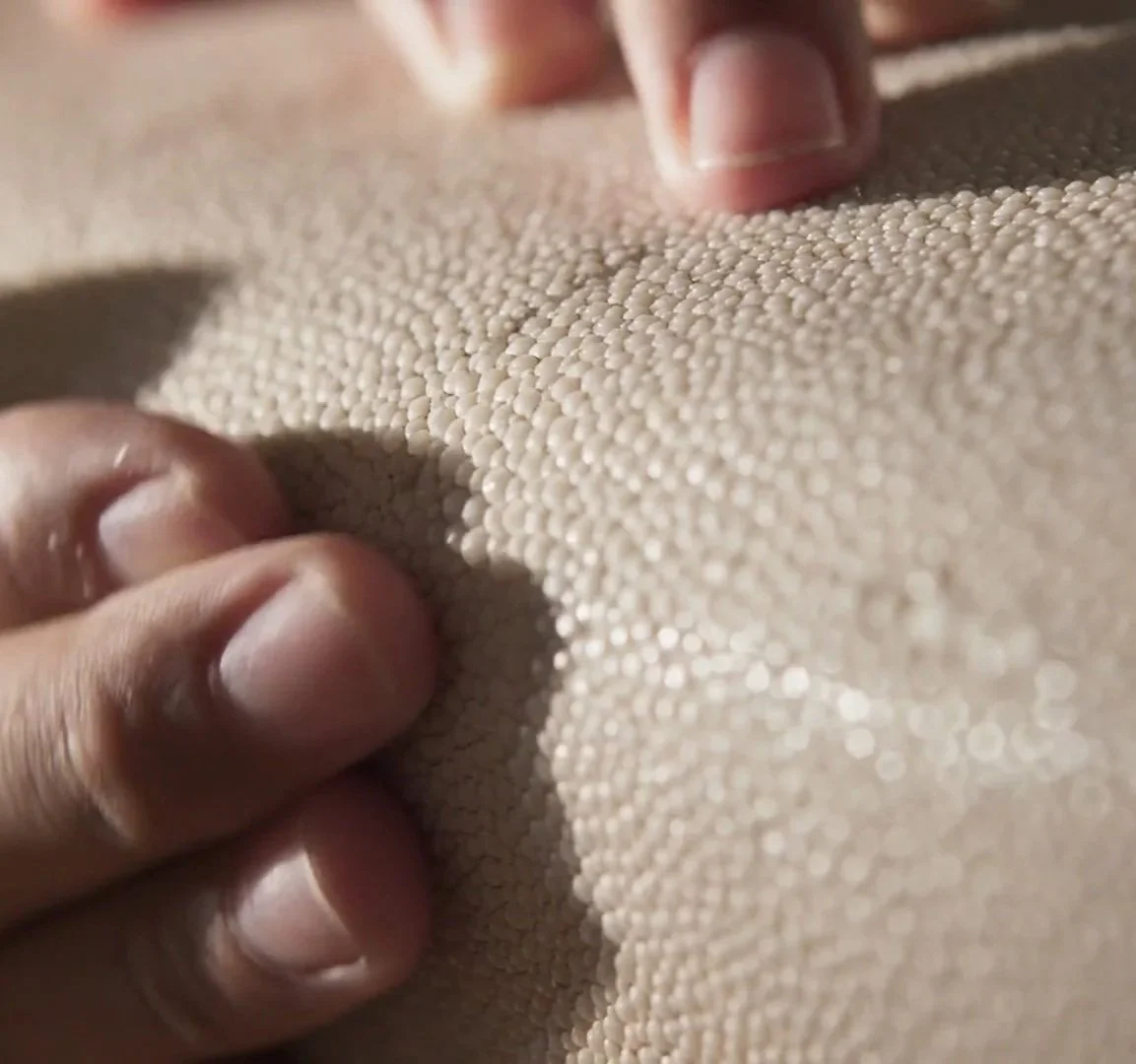
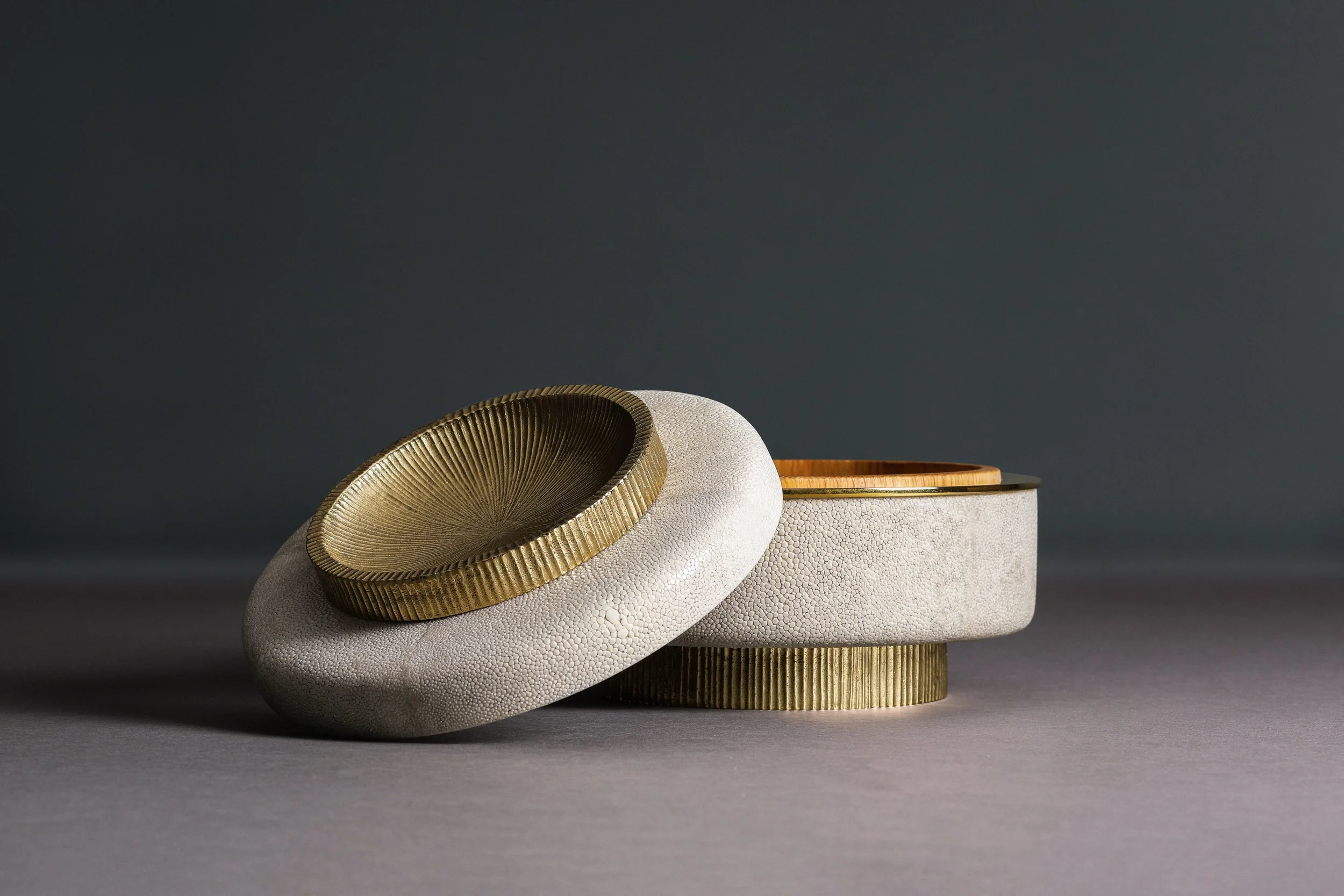
In my company, it’s always been my choice to work with these natural materials. I’ve had to figure out how to make them work in a tropical country. There’s no book on how to work with shagreen, for example. It’s captivated people for centuries: used for the grip on a samurai sword and on Japanese armor. At the end of the 19th century, when England was its main manufacturer, the craftsman John Paul Cooper likened it to the feeling of looking deep down into a pool of sea green water.
It’s taken 26 years of gradual development under my eyes to take it to the finest place I can. I still find it the most incredible surface to interact with, and it gets more beautiful the older it gets. There aren’t many things that can be said about, particularly with most production being about making things faster and cheaper.
“These are the fragments of nature that fortunately we can preserve; leftover skin that happens to be transcendent.”
What has been the greatest transition in your life?
I moved to Hong Kong from Somerset when I was 25. I’d been running a carpet company in the recession years, living almost hand-to-mouth. It was a boot camp in business endurance, but it taught me a lot about determination. And then going to warm, energetic, beautiful Hong Kong after what felt like years of not seeing the sun. Alexandra and I (now my wife and CEO) lived on the 30th floor of a 30-floor building with a view of the harbor: it was just bliss. I got a job in an antique gallery there, dealing in these beautiful antiques. I was so excited I’d stay late researching the exhibitions, so that I always had stories to tell customers. Nobody was making a personal bridge. It's a tiny thing to do, but I love the subtle theatre of it. My whole aim was to put people at ease and make it interesting for them.
What's your relationship with the passing of time?
On a human level, time passes shockingly fast. Seeing my kids now leaving university: I can still remember everything about their first two or three years, and then suddenly we're here, you know, how did that happen? Seeing how friends from 30 years ago have changed, my parents having died — time is just suddenly gone. And then on the business side, we talk a lot about lead times. Timing is often tight, but I do believe that the client cares less about the lead time and much more about getting a good thing. Now, of course, I'm trying to be organized in how things are made. So, if we're making the bronze here, at the same time, we're making the wood carcass here. We're dyeing the straw here. I want the time to be very efficiently spent, but I find it a shame when there's an overfocus on that. I’m not trying to make it take a long time. But it does take a long time to do it well.
What's the dialogue that you have most often with yourself?
My work is about finding the tension between form and material that brings them into balance. There's a delicacy to a material’s complexion which I want the form to carry. So the dialogue is about how I do that in a way that will be fresh, interesting, and relevant with the resources I have. How can I push a design forward with artistry? It’s sketching, sketching and sketching, then reviews, reviews, reviews, followed by swatch-making and prototyping. I don't find it easy at all, and I probably take it a bit too seriously. But when at last everything comes together in one room and it's even better than I could’ve thought, I think about the materials, the love and respect I have for them, and I feel that we’ve given something back to them.
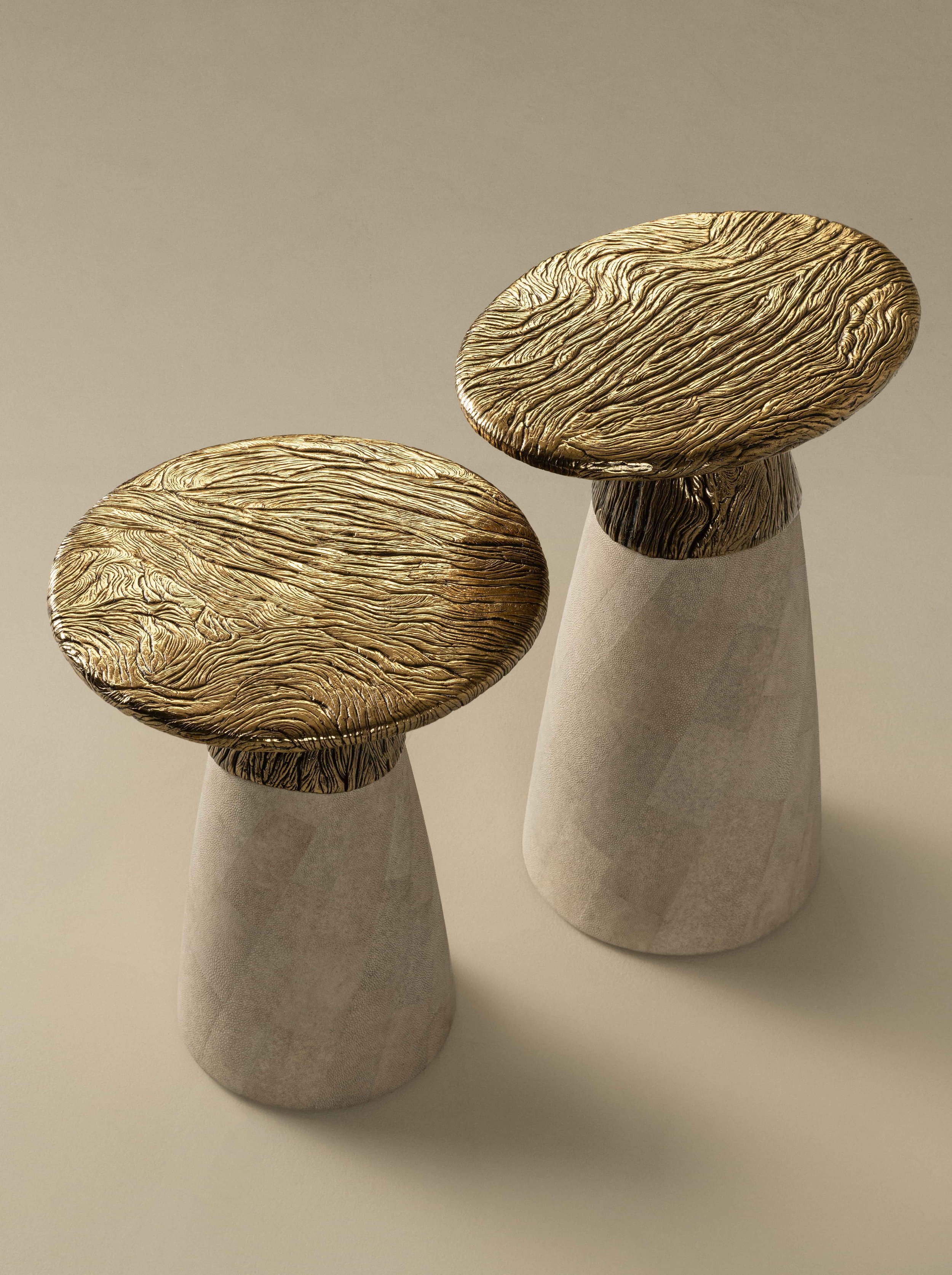
“Shagreen comes from the sea. It beckons you to touch it, understand it, and look into its depths.”
If your materials could speak, what would they say?
I just watched The Odyssey, and there’s this point where Odysseus and his men are going past the island of sirens, and they bind him to the mast so he can safely listen to their song without jumping overboard. Everybody else has wax in their ears. I think that shagreen would be like those sirens. It’s from the sea, it beckons you to touch it, understand it, and look into its depths. It has this ancient, romantic feeling which is just so intoxicating.
As for straw, there’s a famous folk festival in my village in England, South Petherton. When I was a kid, I didn't really like it. It was full of people with big beards and tankards — Morris men. I was kind of avoiding it, but after living away from England so long, I started listening to folk songs and sea shanties. Whether you’re English or not, they give you a sense of the beauty of the culture. If you look up Master Kilby by Nic Jones, it sounds like it’s from the field. That’s the music of straw to me.
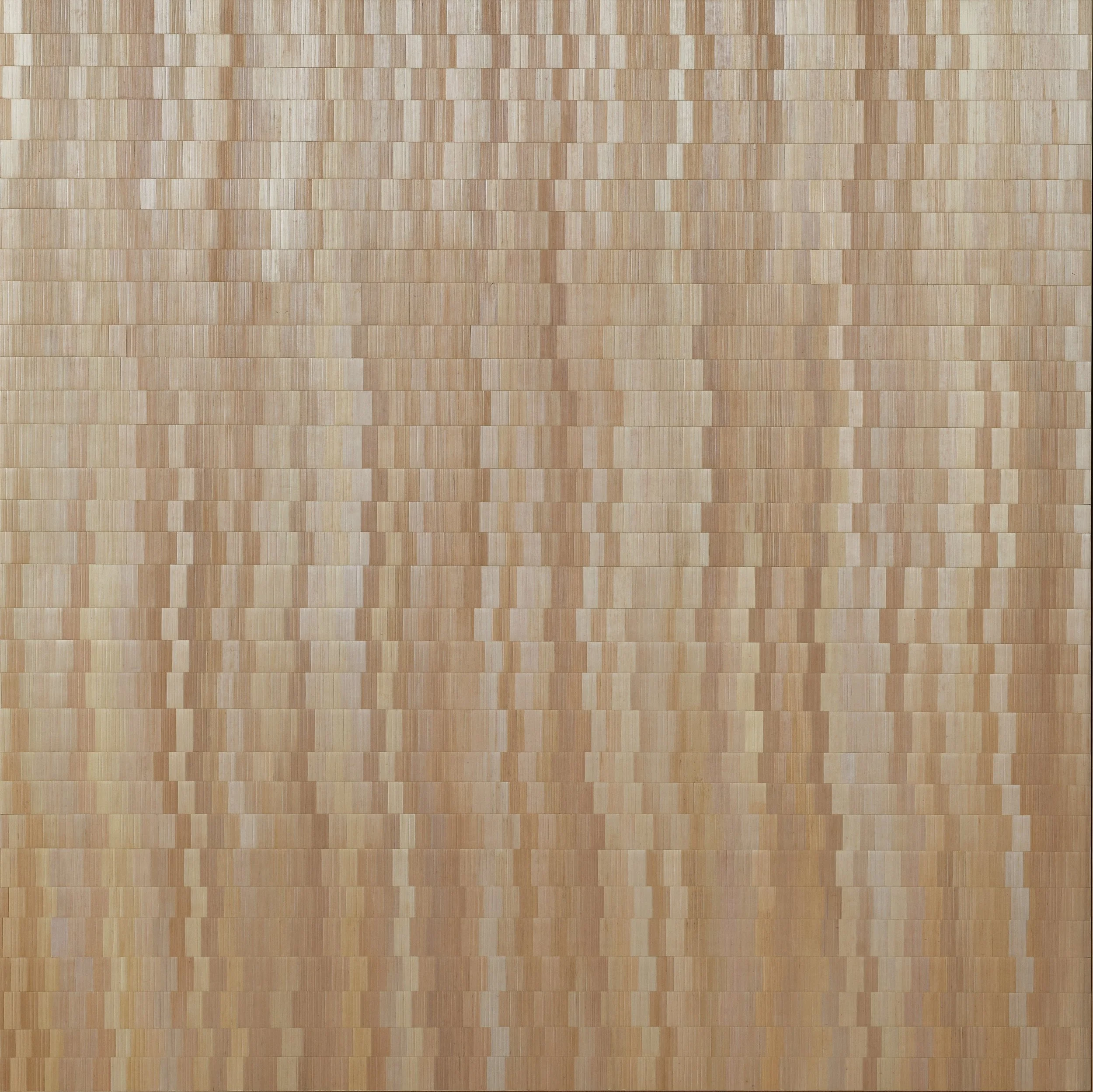
“The sense of possibility that comes from new materials is endless.”
What are you portraying?
A world that began with the theater of retail and is growing into a very human space filled with things you want to touch and learn more about. A creative workplace where everything is made by hand using unusual natural materials. I want to share all of the culture, craft, history, romance and beauty of a piece that, when you live with it, becomes a friend, somehow. I don’t have pets, but I love my objects. My place is crammed full of stuff, but it all sings together.
What are you concealing?
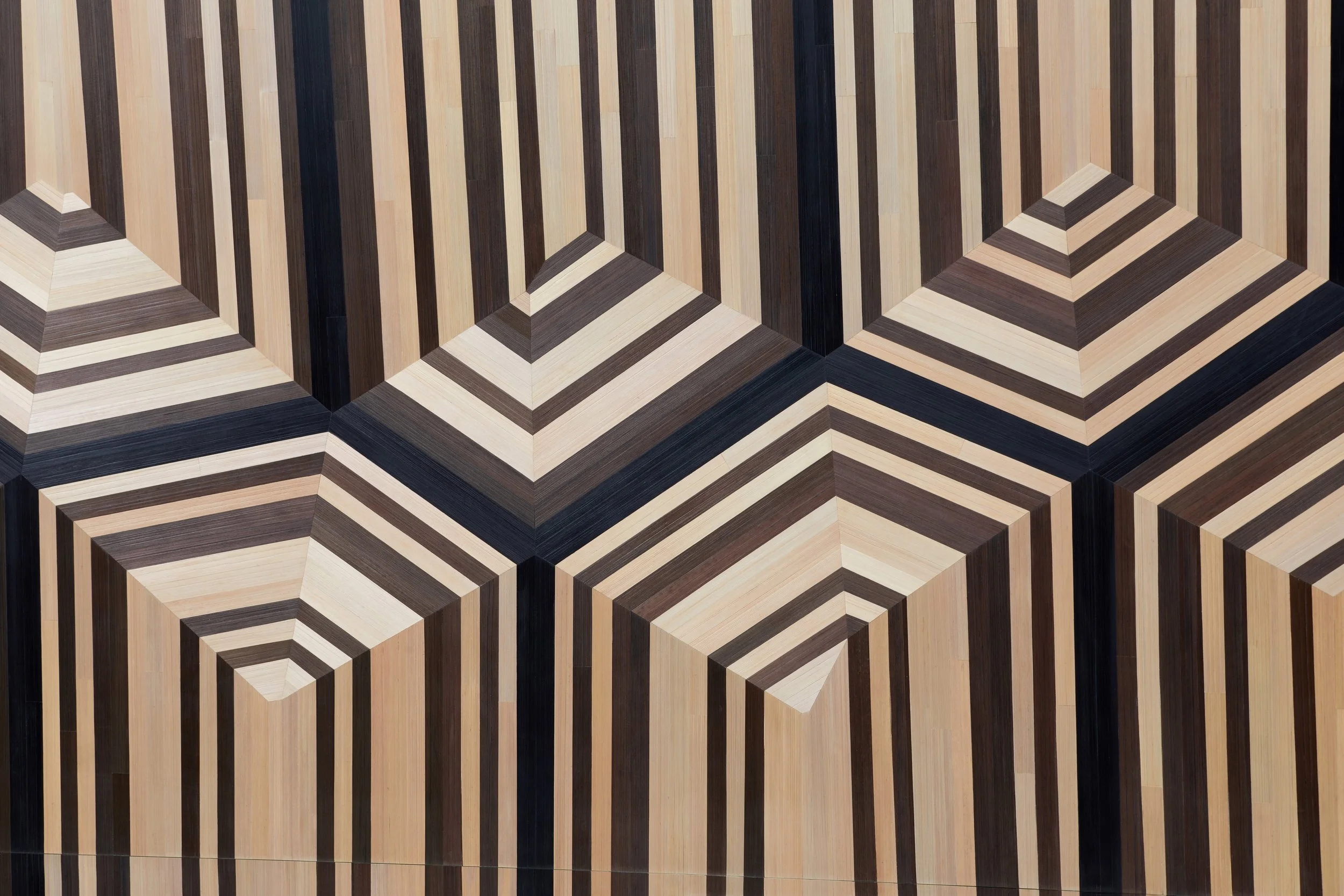
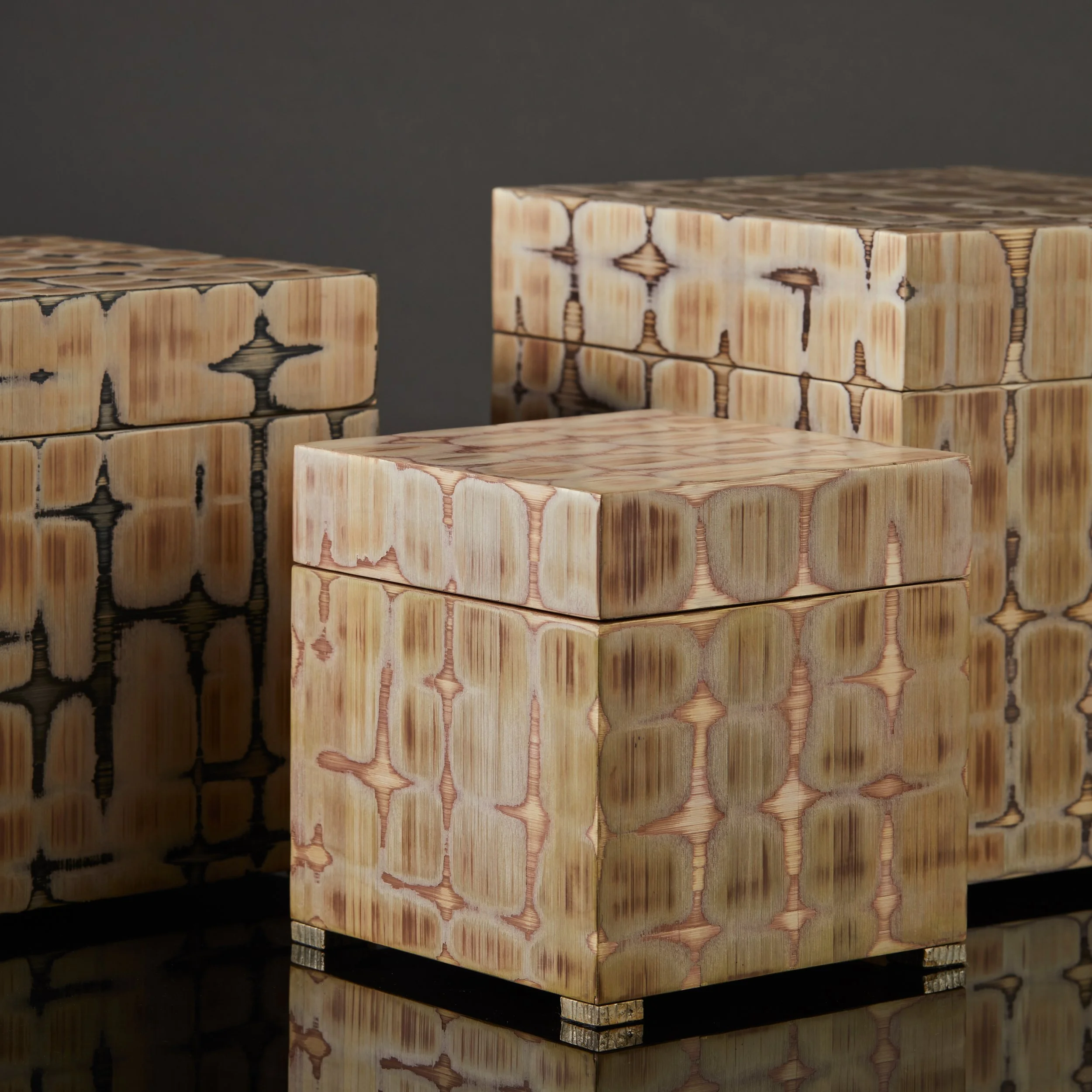
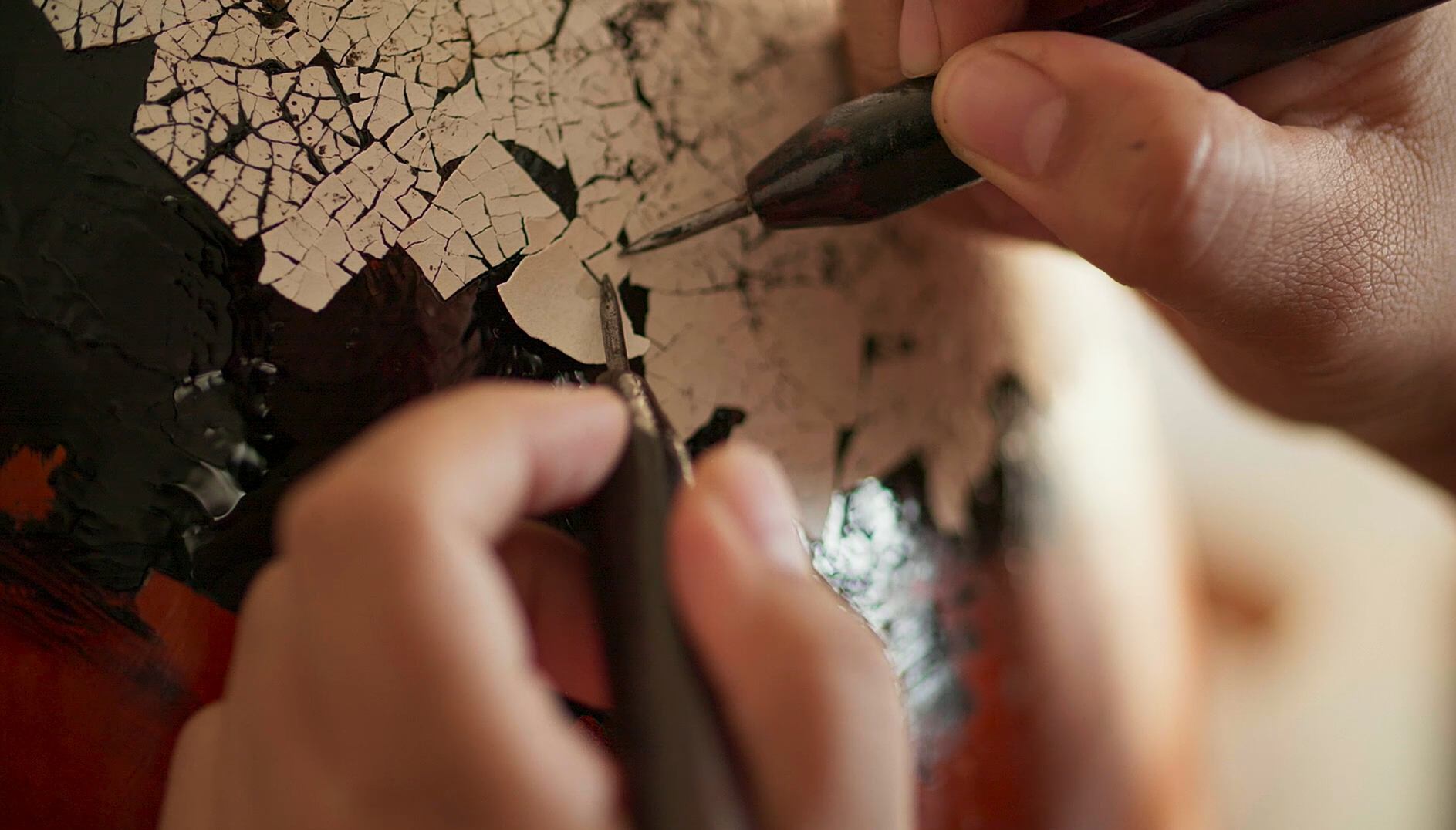
The skin conceals its underlying structure. The heart, the kidneys, the bones. The tools and techniques that allow you to show the skin can seem mundane, but if you don't get them right, the skin isn’t going to work. To make our straw marquetry, we’re buying the straw raw. We're dyeing it ourselves. We’re then able to layer and abrade through it, which is how we arrive at something that’s never been made before. What’s behind these layers is complex and quiet, but it’s very much there.
What would it take for you to let it all out?
If I understand letting it all out as, stop being precious, stop being so neat and tidy, is there a part of me which doesn't want to or can't do that, or likes the idea of it but not the reality? It's an interesting question that I’m still exploring. Rawness is perhaps more the expression that I try to reach as a way to ‘let it all out’; how raw can things go, while still remaining beautiful?
What does it take to be free?
Running a business is a huge undertaking that is not equivalent to feelings of freedom, especially when you’re responsible for nearly 200 people’s livelihoods. But where I do feel free is that I live in Asia, in a culture which is not my own. I feel very lucky to have spent almost 30 years in Thailand, a country I really love, working with craftsmen in the region. Now that I return to England very often, there’s also a new sense of freedom emerging, of living between two worlds.
What is the fire inside that keeps you going?
It's all related to that foundational sense of play in that garden: that first opportunity to make and explore. The sense of possibility that comes from new materials and techniques is endless. We started the company making very simple sculptural pieces, and now there’s a greater complexity about how we think about everything, all of which is just as interesting as it ever was. I think sometimes about taking my younger self through the workshops that I’ve built. Thanks to a skilled cast of thousands, we’ve gone so much further than I ever dreamed of.
See more from Alexander Lamont.